_edited.png)
From Plant to Plastic: Turning An Invasive Weed into Sustainable Packaging

Microplastics, environmental depletion, waste, pollution, health crisis. All words taking over today’s biggest headlines and news outlets. These concerns do contain harsh truths. Plastics are a huge environmental issue because of their long-life spans and centuries needed to decay.

Therefore bioplastics, synthetic plastics made from biomass with biodegradable properties, are becoming a growing topic of research. Current bioplastic products are made from polymers of natural acids or through microorganism fermentation processes. What is now entering the conversation are the use of aquatic weeds and agricultural wastes for new bioplastic innovation due to their natural high-fiber content, renewability, and cost-effectiveness (Ungprasoot et al., 2021). The promise of repurposing aquatic weeds became particularly appealing to young Joseph Nguthiru, who along with his several classmates at Egerton University, were trapped for 5 hours in a dense forest of water hyacinths on Lake Naivasha in Kenya. Their experience led them to innovatively coin the idea of turning repurposing water hyacinths, a prevalent invasive species into the plastic of the future (Meet the Obama Leader, n.d.). But first of all, what makes water hyacinth such a successful candidate for bioplastic production?
Why Water Hyacinth?
Native to the Amazon, water hyacinth was introduced to many countries as an ornamental, decorative plant. However, it quickly took over many aquatic ecosystems due to its extremely rapid reproduction in ten days or less when cultivated in ideal conditions (Water Hyacinth, n.d.). After the weed inhabits the surface of the body of water, it blocks sunlight from reaching the submerged native plants, and it also reduces the level of dissolved oxygen for other organisms to use (Water Hyacinth, n.d.). For regulation purposes, water hyacinth also tends to cause blockages in irrigation systems or waterways, which results in billions of dollars to control costs and economic losses (Department of Energy, 2025). Its invasive population, disruption of resources, and damage to nearby species to water systems makes it incredibly difficult to deal with and creates environmental vicissitudes that are challenging to accommodate.
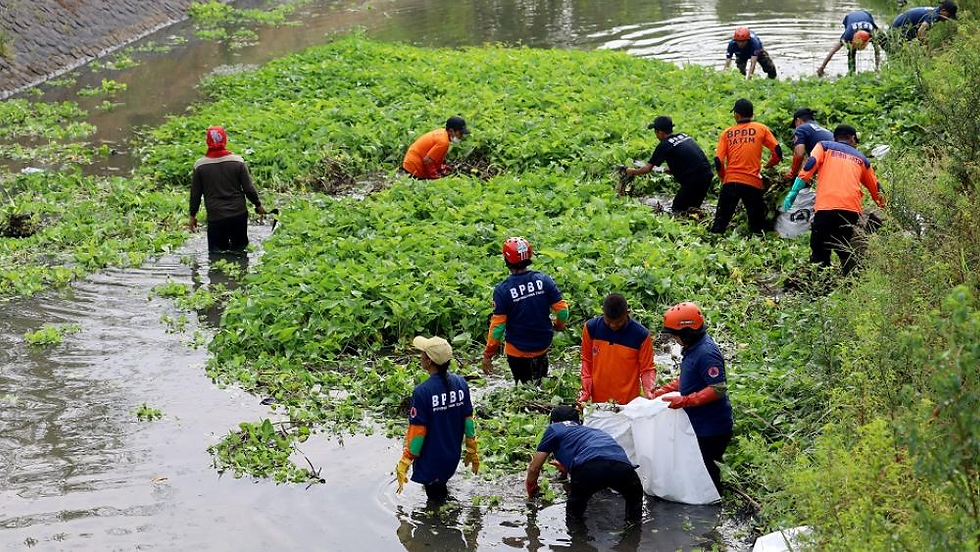
Besides efforts to eliminate its environmental invasiveness and economic impact, water hyacinth contains various components that make it ideal for bioplastic production. Water hyacinths contain high levels of cellulose, hemicellulose, and lignin, all compounds that can be used to make products biodegradable. Additionally, carboxymethylcellulose (CMC) can be extracted from water hyacinth which has non-toxic, odorless, and tasteless properties (Kusuma et al., 2024), rendering it useful for extending shelf-life for packaged goods. When it was discovered that water hyacinth contained appropriate components to be utilized in optimizing bioplastic functionality, it was undeniably a suitable option to valorize for production (Kusuma et al., 2024) .
How did HyaPak Transform Bioplastic Production
Returning back to Nguthiru’s mission to turn water hyacinth’s overpopulation into a profitable company, he founded the company HyaPak to turn aquatic wastes into functional, biodegradable plastics. His model starts with harvesting the hyacinths, a system that creates green jobs and incentivizes cleanup of nearby bodies of water in local communities. Then the weeds are dried and shipped to Nairobi, the capital city of Kenya, to be manufactured. Within the manufacturing plants, cellulose and CMC are synthesized via techniques like dewaxing, bleaching, alkaline hydrolysis (Chaiwarit et al., 2022), and alkylation (CMC only) (Saputra et al., 2014). Once cellulose and CMC are isolated, food-grade additives like glycerine (a natural plasticizer) and starches (i.e. tapioca or corn) are combined into the mixture to give the plastic structure, higher tensile strength, flexibility, and increased biodegradability (Duruin et al., 2022).

HyaPak currently produces and sells seedling bags which can be placed into the soil and release nutrients as they decompose (3-12 months in soil/water). They also have developed parcel mailers, floral wraps, and food carton linings, all of which have similar properties to polyethylene and polypropylene, the most common commercial plastics found in food containers, bottle caps, and plastic bags (HyaPak, n.d.).

Key Takeaways
In this day and age, it is becoming increasingly imperative to understand how to implement sustainability into new consumer products. With plastic being so ubiquitous across agriculture, food packaging, and so much more, it becomes difficult to remodel or even reimagine the existing systems. However, organizations such as Hyapak, have demonstrated that the problems may be new solutions and that innovation can be innocuous and even beneficial to both the environment and industry.
References
Chaiwarit, T., Chanabodeechalermrung, B., Kantrong, N., Chittasupho, C., & Jantrawut, P. (2022). Fabrication and Evaluation of Water Hyacinth Cellulose-Composited Hydrogel Containing Quercetin for Topical Antibacterial Applications. Gels, 8(12), 767. https://doi.org/10.3390/gels8120767
Department of Energy, E. and C. A. (2025, July 14). Water hyacinth. Department of Energy, Environment and Climate Action. (Victoria). Agriculture Victoria. https://agriculture.vic.gov.au/biosecurity/weeds/state-prohibited-weeds/water-hyacinth
Duruin, A. A., Lalantacon, X. F., Leysa, J. G., Lll, R. L., Obena, R. A., Sapal, A., Leysa, M., Valdez, A., & Abusama, H. (2022). Potential Production of Bioplastic from Water Hyacinth (Eichornia crassipes). ASEAN Journal of Science and Engineering, 2(2), 139–142. https://doi.org/10.17509/ajse.v2i2.37801
HyaPak. (n.d.). Retrieved July 14, 2026, from https://hyapak.com/
Komo, N. (2025, January 19). How the invasive water hyacinth is threatening fishermen’s livelihoods on a popular Kenyan lake. AP News. AP News. https://apnews.com/article/kenya-water-hyacinth-invasive-fishing-2ea35d0203bc995a36ddbe32386c1141
Kusuma, H. S., Jaya, D. E. C., Nasution, S. A., Mongilong, R. K., Fachri, D. M., & Afifah, D. K. (2024). Transformation of water hyacinth into biodegradable film added with carboxymethyl cellulose and chitosan and its characterization. Materials Today Communications, 41, 111028. https://doi.org/10.1016/j.mtcomm.2024.111028
Meet the Obama leader in Africa turning invasive plants into a plastic alternative. (n.d.). Obama Foundation. Retrieved July 14, 2026, from https://www.obama.org/stories/innovation-in-action-joseph-nguthiru/
Neumann, N. (2024, February 26). High economic damage caused by invasive aquatic plants worldwide | IGB [Science of the Total Environment]. High Economic Damage Caused by Invasive Aquatic Plants Worldwide. https://www.igb-berlin.de/en/news/high-economic-damage-caused-invasive-aquatic-plants-worldwide
Saputra, A., Qadhayna, L., & Pitaloka, A. (2014). Synthesis and Characterization of Carboxymethyl Cellulose (CMC) from Water Hyacinth Using Ethanol-Isobutyl Alcohol Mixture as the Solvents. International Journal of Chemical Engineering and Applications, 5, 36–40. https://doi.org/10.7763/IJCEA.2014.V5.347
Staff, C. N. N. (2025, January 7). This alien plant is lethal for the environment. Now it’s being turned into a plastic to regrow forests. CTVNews. CTVNews. https://www.ctvnews.ca/sci-tech/article/this-alien-plant-is-lethal-for-the-environment-now-its-being-turned-into-a-plastic-to-regrow-forests/
Ungprasoot, P., Muanruksa, P., Tanamool, V., Winterburn, J., & Kaewkannetra, P. (2021). Ungprasoot, P., Muanruksa, P., Tanamool, V., Winterburn, J., & Kaewkannetra, P. (2021). Valorization of Aquatic Weed and Agricultural Residues for Innovative Biopolymer Production and Their Biodegradation. Polymers, 13(17), 2838. Https://doi.org/10.3390/polym13172838. Polymers, 13(17), 2838. https://doi.org/10.3390/polym13172838
Wasteland: Streams of Waste Festival. (n.d.). Just Peace. Retrieved July 14, 2026, from https://www.justpeacethehague.org/en/event/wasteland-streams-of-waste-festival
Water hyacinth. (n.d.). Brisbane City Council. Retrieved July 14, 2026, from https://weeds.brisbane.qld.gov.au/weeds/water-hyacinth

Comments