_edited.png)
Debunking The Calorie

How did the calorie become the standard unit to measure the energy of food? Originally used by scientists, it made its way onto nutritional labels to allow customers to understand the foods they consumed. However, calories alone cannot represent the full intricacies of how the body processes energy from food.
The Origin of the Calorie
A calorie was originally defined as the amount of energy required to raise the temperature of 1 gram of water by 1°C at standard atmospheric pressure. Because the amount of energy required depends on the temperature of the water, it was necessary to specify the 15° calorie: the energy needed to raise the temperature of 1 gram of water from 14.5 °C to 15.5 °C ("Calorie", n.d.).
The calories listed on nutritional labels are actually kilocalories, each equal to 1000 scientific calories. This reason is why they are typically labeled as “kcal”; in the United States and Canada, the term “calorie” often refers to a kilocalorie and is abbreviated as “Cal” (Van De Walle, 2024).
Originally, a calorimeter was used to measure the calorie content of a food. With its water content evaporated, food would be placed in a container surrounded by water. The container would then be sealed, and the food ignited by piping in oxygen. Afterwards, the calorie content would be calculated by the rise in temperature of the surrounding water (Schwarcz, 2018).
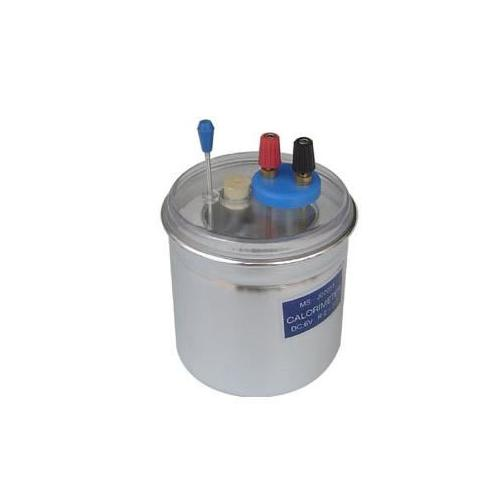
How Calories are Counted Now
The calorimeter is rarely used to measure calories today. In fact, most calorie values are estimated from the Atwater system, which prescribes calorie amounts for different types of nutrients. Specifically, there are 4 calories per gram of protein, 4 calories per gram of carbohydrate, 9 calories per gram of fat, and 7 calories per gram of alcohol. These values were determined by averaging many trials of burning. Since carbohydrates contain some fiber, which is undigested, the fiber is subtracted from the total carbohydrate content to calculate the calories. (Painter, 2006)

Inaccuracies in CaloriE Counting
The Atwater system does not account for many processes that affect the total calorie count of a food. Some of these factors include the cooking method, processing, and digestibility of the food. In a study at Harvard University, researchers found that mice gained more weight when fed cooked foods than raw foods, suggesting that the mice processed more calories from the cooked foods. The heat from cooking begins to break down proteins, improving the digestibility of food. It also kills bacteria, reducing the energy the immune system needs to use to fight against any pathogens (Dunn, 2013).
Different individuals may also process the same amount of calories in different ways based on their gut microbiome. Studies have shown that overweight individuals have different types of organisms in their gut than those who are naturally thin; in fact, transferring the microbiota of lean people to those who are overweight may result in weight changes ("Stop Counting", 2020). Additionally, researchers in the 1900s discovered that some Russian populations had longer large intestines than some Polish populations, meaning that a Russian person could get more energy than a Polish person from the same amount of calories (Dunn, 2013). These many biological differences mean that calorie counting is unique to every individual.

Key Takeaways
Though nutrition labels provide a convenient estimate, they do not reflect the complex process of digestion or individual biological differences. Cooking, gut microbiomes, and even differences in anatomy can change how an individual absorbs food. By understanding the method of calorie counting and its flaws, people may approach their own health and nutrition with more awareness.
References
Bahorsky, R. (2022, December 13). Discovery Will Aid Gut-Microbiome Research Efforts. College and Graduate School of Arts and Sciences, University of Virginia. https://as.virginia.edu/discovery-will-aid-gut-microbiome-research-efforts
Boneless, Skinless Chicken Breasts, 4.7-6.1 lb Tray. (n.d.). Walmart. Retrieved July 5, 2025, from https://www.walmart.com/ip/Boneless-Skinless-Chicken-Breasts-4-7-6-1-lb-Tray/27935840
Calorie. (n.d.). Britannica. Retrieved July 5, 2025, from https://www.britannica.com/science/calorie
Dunn, R. (2013, September 1). Science Reveals Why Calorie Counts Are All Wrong. Scientific American. https://www.scientificamerican.com/article/science-reveals-why-calorie-counts-are-all-wrong/
Electric Calorimeter. (n.d.). Thomas Scientific. Retrieved July 5, 2025, from https://www.thomassci.com/p/electric-calorimeter
Painter, J. (2006, July 31). How Do Food Manufacturers Calculate the Calorie Count of Packaged Foods? Scientific American. https://www.scientificamerican.com/article/how-do-food-manufacturers/
Schwarcz, J. (2018, September 6). How is the caloric value of food determined? | Office for Science and Society—McGill University. McGill. https://www.mcgill.ca/oss/article/nutrition/how-caloric-value-food-determined
Stop counting calories. (2020, October 1). Harvard Health. https://www.health.harvard.edu/staying-healthy/stop-counting-calories
Van De Walle, G. (2024, October 29). What’s the Difference Between Kcal and Calories? Healthline. https://www.healthline.com/nutrition/kcal-vs-calories
Thumbnail: photographed by Diana Polekhina


Mình có lần lướt đọc mấy trao đổi trên mạng thì thấy nhắc tới bong da so trong lúc mọi người đang bàn luận về kết quả các trận đấu, nên cũng mở ra xem thử cho biết. Mình không tìm hiểu sâu, chỉ xem qua trong thời gian ngắn để nhìn cách bố trí thông tin, tỷ số và các mục liên quan. Cảm giác là trình bày khá gọn, các phần rõ ràng nên đọc lướt cũng không bị rối, với mình như vậy là đủ để nắm thông tin cơ bản rồi trên bongdaso.org.